
EPDM Commercial Roofing in Ontario, CA
EPDM Still Makes Sense on Certain Ontario Roofs
EPDM has lost market share to TPO across most of Southern California, and for good reason on new construction. It has not disappeared from our bid list, because on retrofit work, older buildings, and tight-budget recovers, black or white EPDM rubber can still beat single-ply thermoplastics on installed cost per square foot. Here is where that math holds up and where it does not.
Black EPDM and the Desert Sun Problem
Standard black EPDM absorbs solar heat rather than reflecting it, and on a roof in this valley that means summer surface temperatures well above a white membrane's. That heat load accelerates the natural rubber's aging curve and drives up cooling costs on conditioned buildings below. We still spec black EPDM on unconditioned warehouse shells where the reflectance penalty has no operational cost, and on buildings where a Title 24 alteration threshold is not triggered by the scope of work.
White EPDM exists specifically to solve the reflectance problem, using a co-cured or laminated white surface over the same rubber base. It costs more than black EPDM but less than most TPO, and on climate zone 10 reroof scopes that require cool-roof compliance, white EPDM is a legitimate lower-cost alternative to TPO when the building doesn't need TPO's chemical resistance advantages.
Attachment Method and the Dead Load Question
EPDM comes in three attachment styles: fully adhered, mechanically attached, and ballasted with river rock or paver ballast. Ballasted EPDM is the cheapest membrane cost per square foot in the category, but the ballast itself adds ten to fifteen pounds per square foot of dead load, which most panelized wood decks around Pomona and older Ontario industrial stock were never designed to carry as an added retrofit load. We run the structural numbers before quoting ballast, and on most of the buildings we see the answer is no.
Mechanically attached EPDM is the workhorse choice for retrofit work: lower dead load than ballast, lower labor cost than fully adhered, with a fastening pattern engineered to the specific wind exposure. Fully adhered EPDM costs more in labor but handles high-parapet, high-exposure buildings and unusual roof geometries better, since there is no fastener pattern to defeat in a wind event.
Seams Are the Weak Point, and Everyone Knows It
EPDM seams are taped, not welded, using either a cured adhesive tape or newer factory-applied seam tape systems. Tape seams have a real failure mode that heat-welded TPO seams do not: adhesive breakdown over time, especially at seams exposed to standing water or repeated thermal cycling. This is the single biggest reason EPDM has ceded ground to TPO on new large-format warehouse roofs, where seam count is high and access for future seam maintenance is limited.
On smaller roofs or roofs with lower seam density, the risk is more manageable, and we build seam inspection into any maintenance program we run for a client on an EPDM roof rather than treating it as a set-and-forget membrane.
Where EPDM Wins the Estimate
- Recover projects over a sound existing roof where budget, not chemical exposure or Title 24 optics, drives the decision
- Irregular roof geometries with heavy penetration counts, where field-applied flashing in rubber is more forgiving than thermoplastic detail work
- Unconditioned storage buildings where reflectance has no operational payback
- Buildings in Jurupa Valley and Mira Loma's older warehouse district already carrying EPDM, where a compatible recover avoids a full tear-off
- Owners planning a shorter hold period who want the lowest defensible installed cost
Ozone, UV, and the Rubber Aging Curve
EPDM is genuinely durable rubber, and a well-installed system with sound seams will run twenty to thirty years in milder climates. Southern California's UV load and ozone concentration compress that curve somewhat, particularly on black membrane in full sun with no shading. We factor a shorter realistic service life into the lifecycle-cost-per-square-foot math for black EPDM specifically, rather than quoting the manufacturer's best-case number as if it applied uniformly here.
How We Decide Between EPDM and TPO for a Given Building
We do not default to either system. The comparison comes down to installed cost per square foot, Title 24 exposure, seam count and complexity, and hold period. For a straightforward, budget-driven recover on a modest building, EPDM often wins outright. For a large warehouse with a long hold, high seam density, and a cool-roof requirement, TPO usually wins on lifecycle math even at a higher upfront number. See our TPO single-ply roofing page for that side of the comparison.
What Ontario Building Owners Ask About EPDM
Is EPDM still a legitimate option or is it outdated?
It is legitimate on the right building. It has lost ground on large new-construction warehouse work, but on retrofit and budget-driven recover jobs it remains a sound, lower-cost choice.
Should I choose black or white EPDM?
White, if the building is conditioned or the scope triggers Title 24 cool-roof requirements. Black only makes sense on unconditioned shells where reflectance has no payback.
How much does EPDM cost compared to TPO?
Material cost typically runs lower per square foot than TPO, though the gap narrows once you account for EPDM's shorter realistic service life on high-UV roofs and the seam maintenance program we recommend building into ownership costs.
Can I add ballast to lower my installed cost?
Only if the deck can carry it. We check the structural capacity first, and on most panelized wood decks in this market the added dead load rules ballast out before cost even enters the conversation.
How often do EPDM seams need inspection?
We recommend an annual seam walk at minimum, more often on roofs with standing water history or heavy rooftop equipment traffic that stresses seams near curbs and penetrations.
Related
Ready to review the roof scope?
Request a Roof Assessment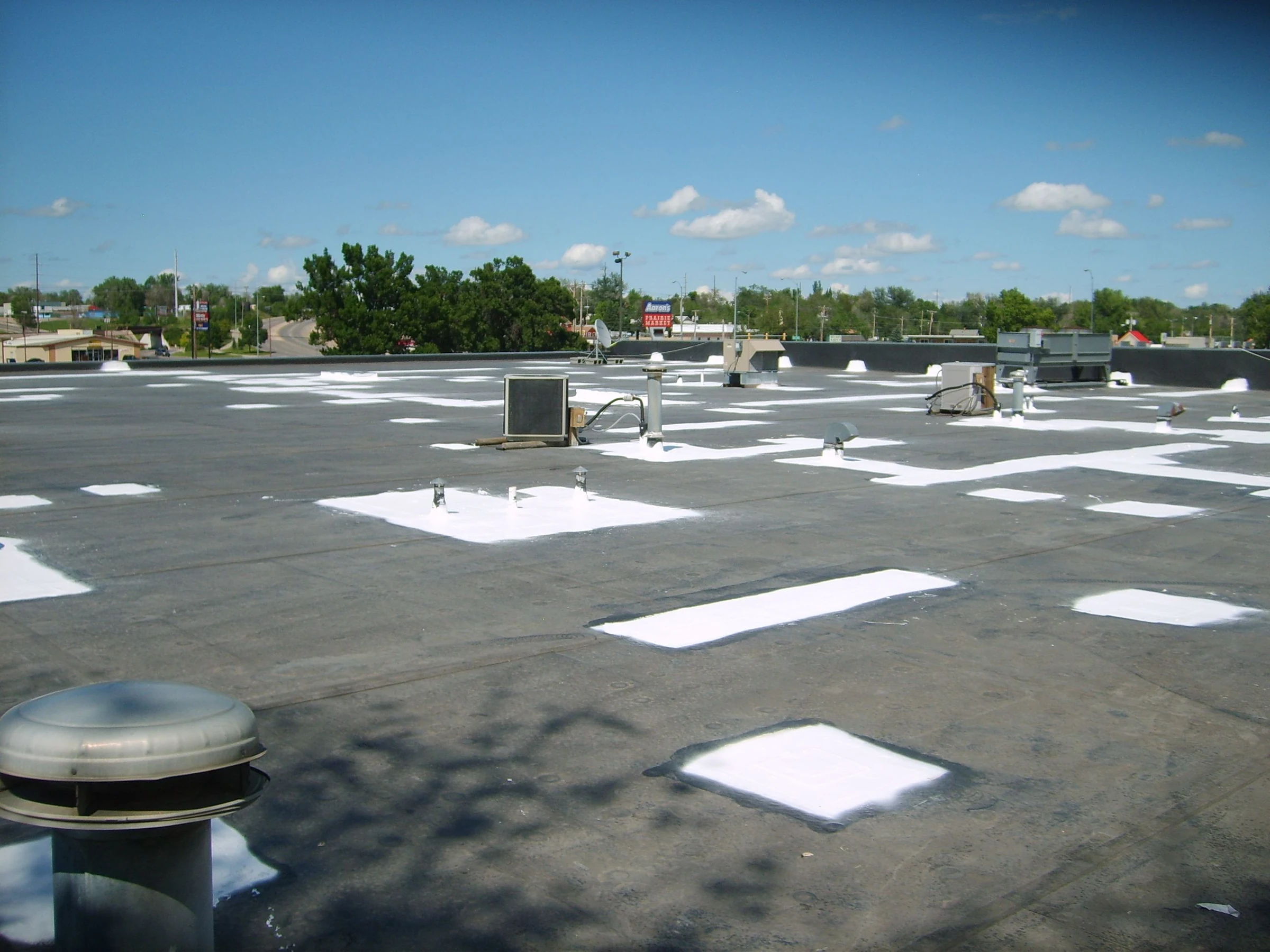
Project List
Commercial Roof Inspections & Reports in Ontario
Commercial roof inspections and condition reports in Ontario covering membrane, seams, flashings, drainage, penetrations, moisture indicators, photos, and next steps.
Commercial Roof Repair in Ontario
Commercial roof repair in Ontario with leak investigation, documented repair boundaries, emergency stabilization, and planned corrective work.
Commercial Roof Replacement in Ontario
Commercial roof replacement in Ontario with clear tear-off or recover scopes, system options, phasing, budgeting, and closeout documentation.
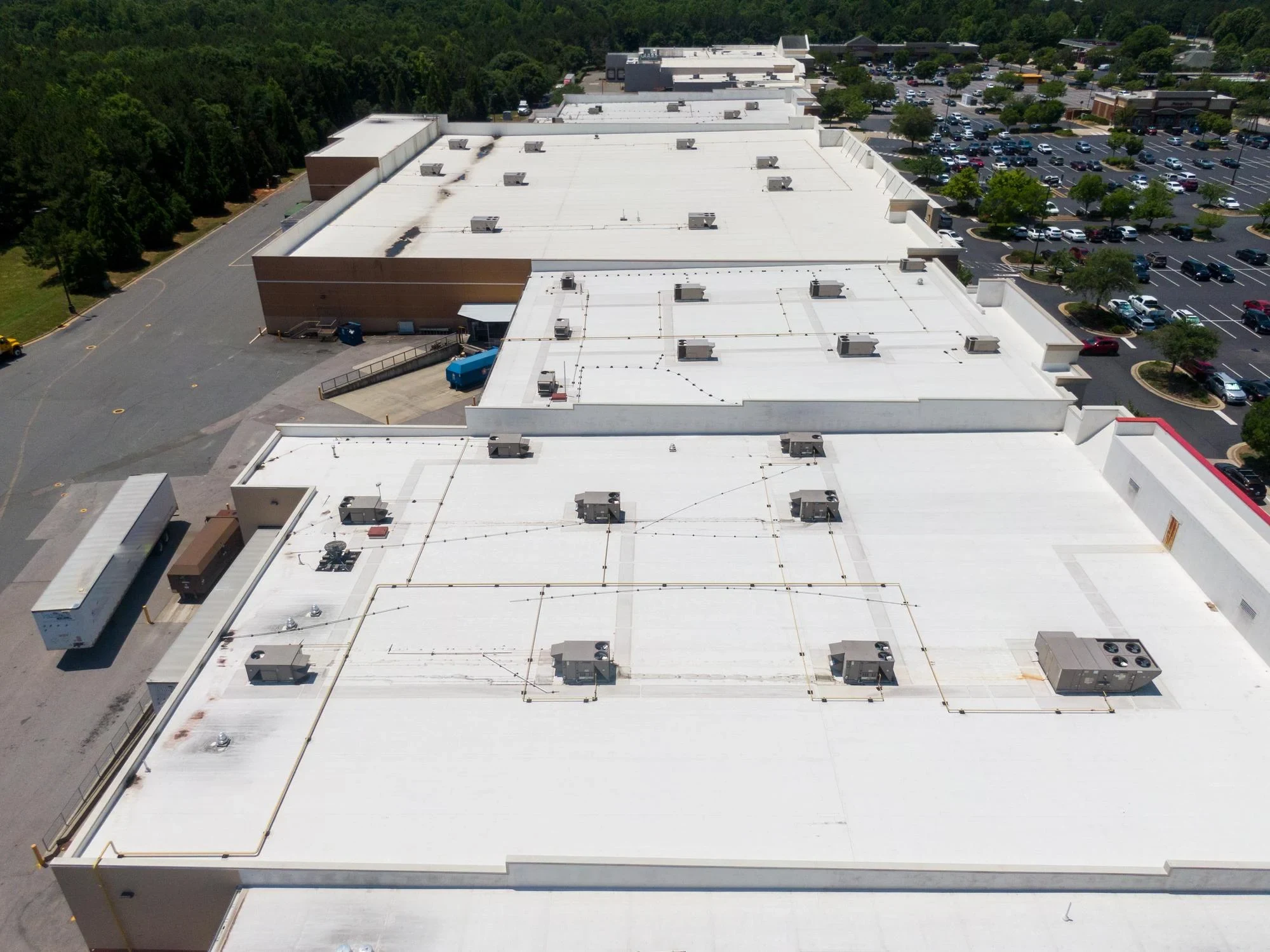
Commercial Reroofing in Ontario, CA
Commercial reroofing for Ontario, CA warehouses, retail, and airport hotels. Recover vs. replace math, Title 24 cool roof rules, and per-square-foot budgets.
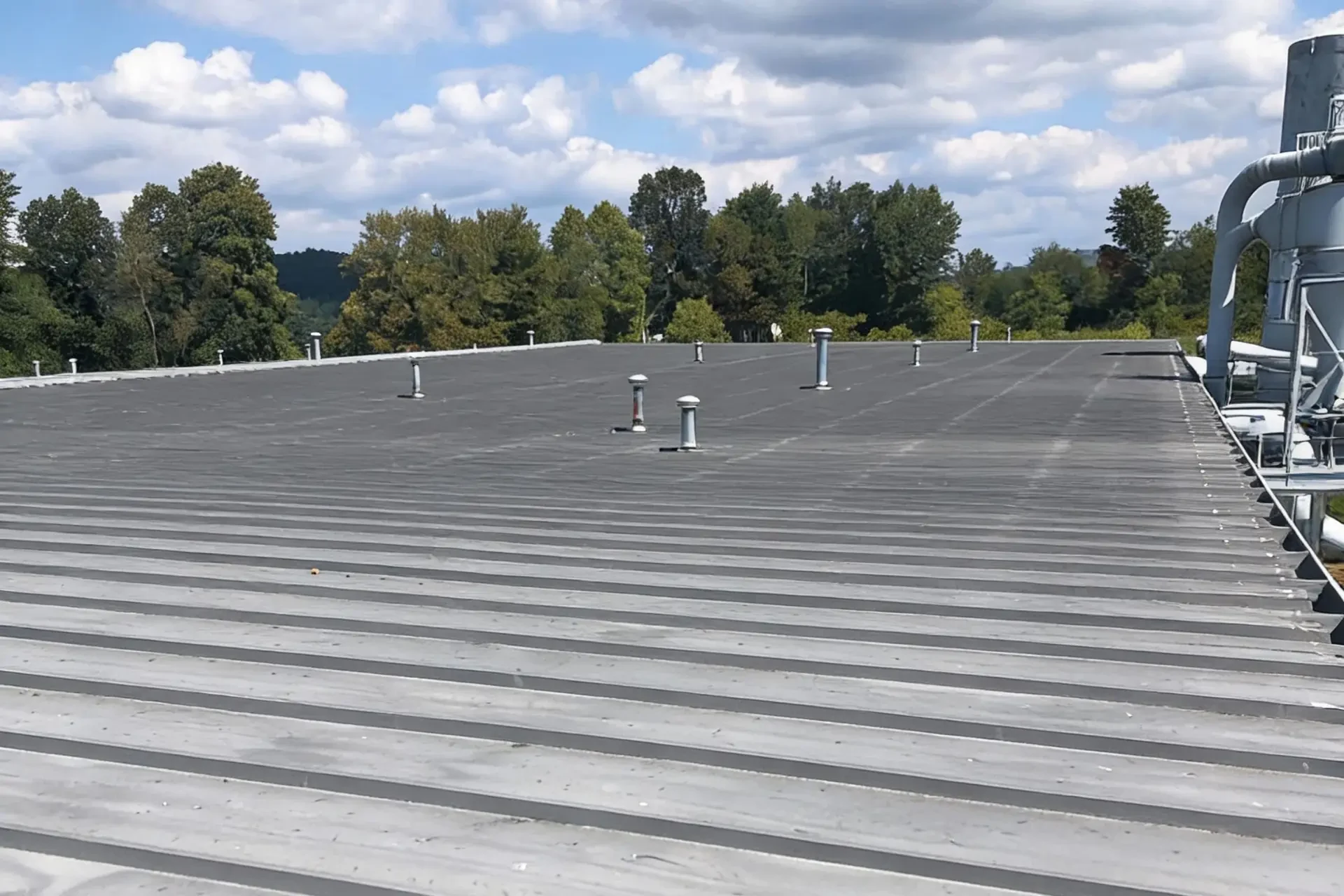
Commercial Roof Maintenance Programs in Ontario
Commercial roof maintenance programs in Ontario with scheduled inspections, drain and detail service, repair tracking, photos, and budget priorities.
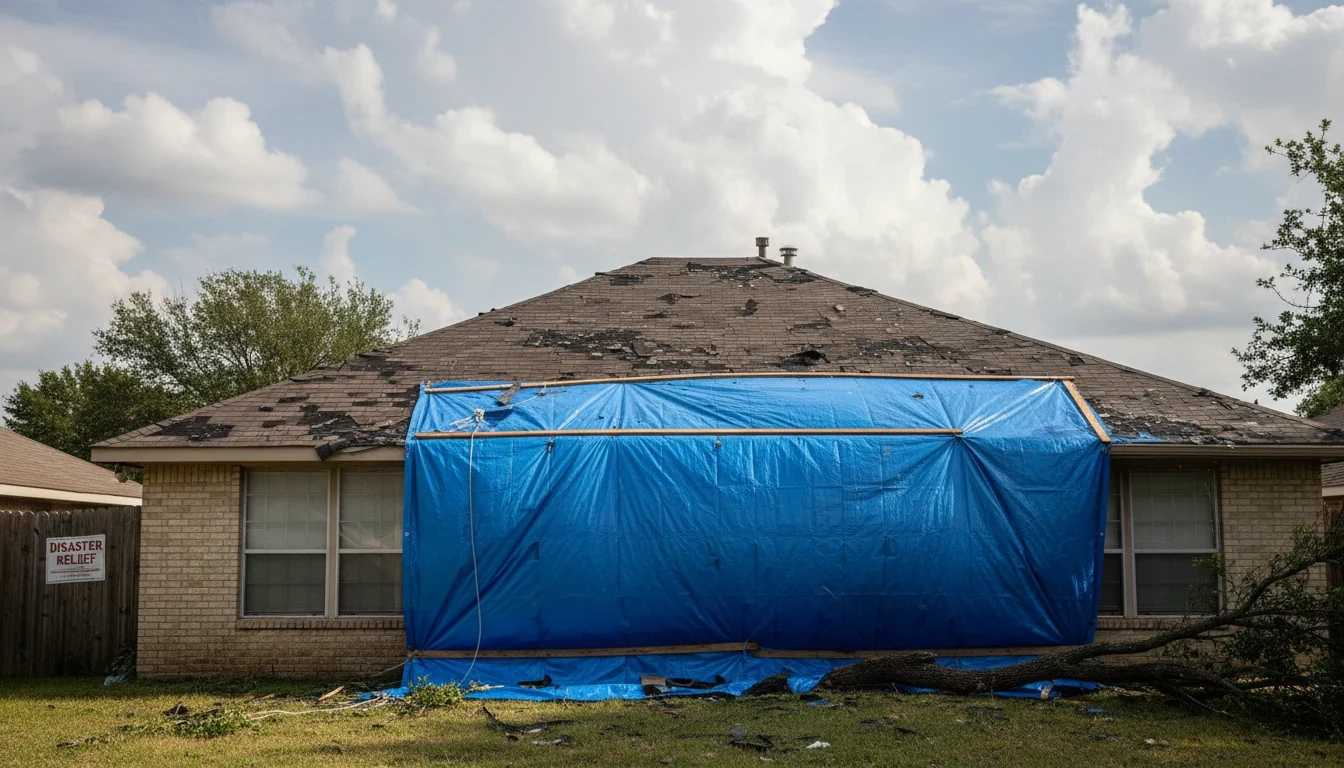
Emergency Tarp and Dry-In Service in Ontario, CA
Emergency roof tarp and dry-in service for Ontario, CA warehouses and distribution centers. Mobilization pricing and what stops active water fast.
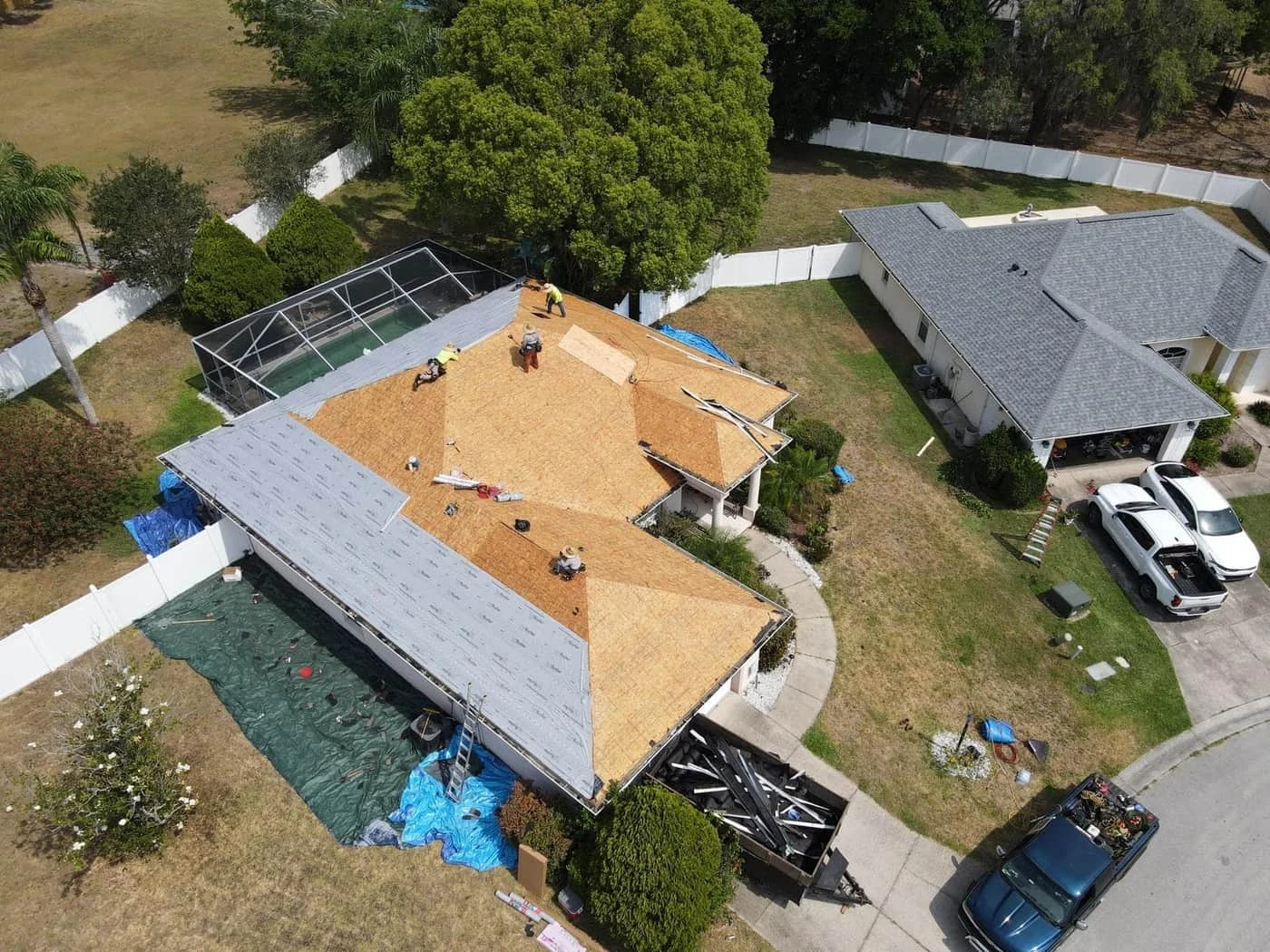
Storm Damage Roof Repair in Ontario, CA
Storm damage roof repair for Ontario, CA buildings hit by Santa Ana wind or winter rain events. Documented damage scopes and realistic repair budgets.
Roof Recover & Overlay in Ontario, CA
Roof recover and overlay for Ontario, CA warehouses. Moisture survey criteria, the two-covering code limit, and the real cost-per-square-foot math against tear-off.