
White EPDM Roofing in Ontario, CA
White EPDM: Rubber's Flexibility, TPO's Reflectance Number
Owners who like EPDM's track record but need to clear Title 24's cool-roof threshold end up looking at white EPDM. It gives up nothing on the rubber membrane's flexibility and detailing advantages while posting a reflectance number that a black sheet cannot. The tradeoff shows up in cost and in how the seams get made, and both are worth putting in front of a client before the bid is final.
How a Rubber Membrane Gets a White Surface
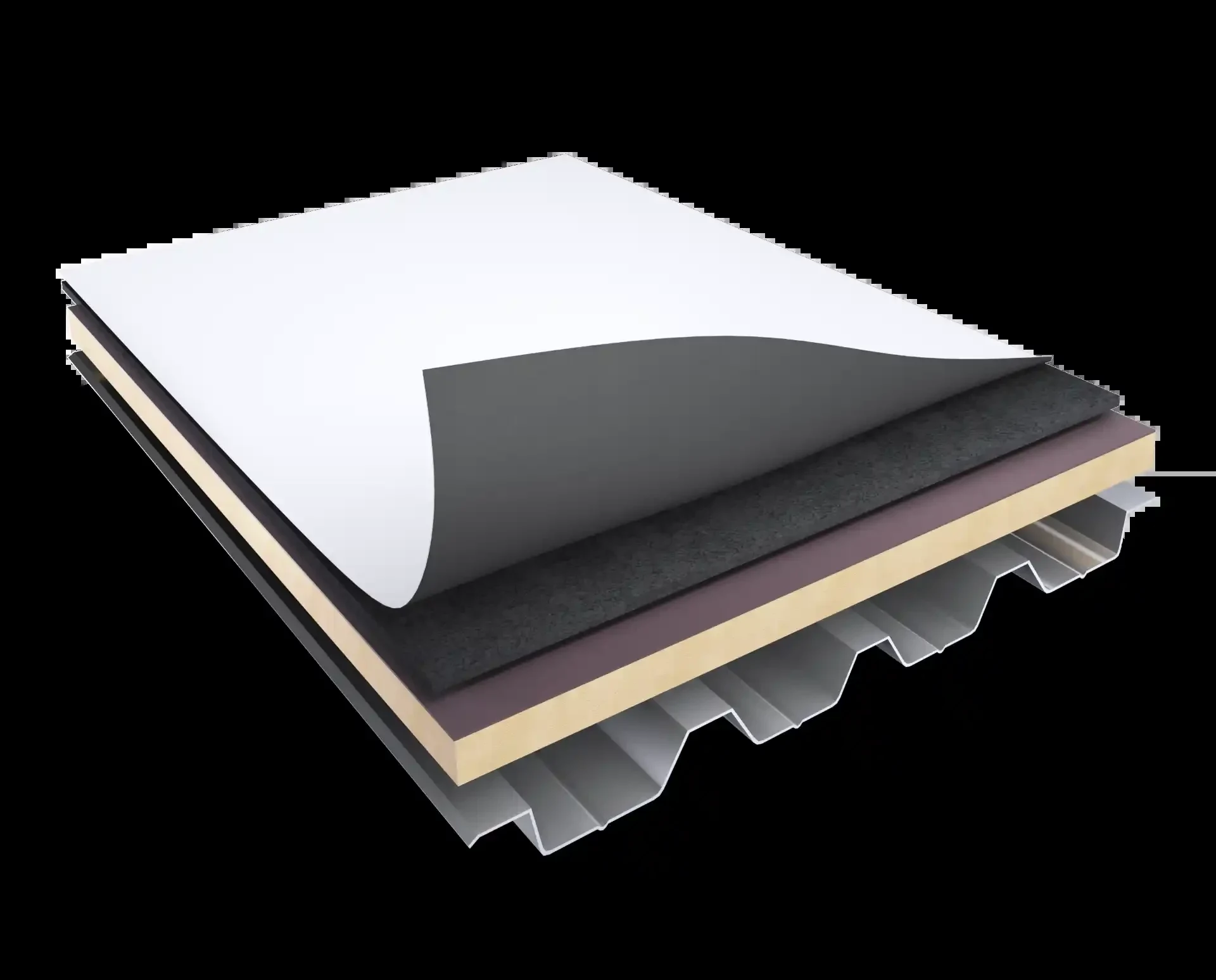
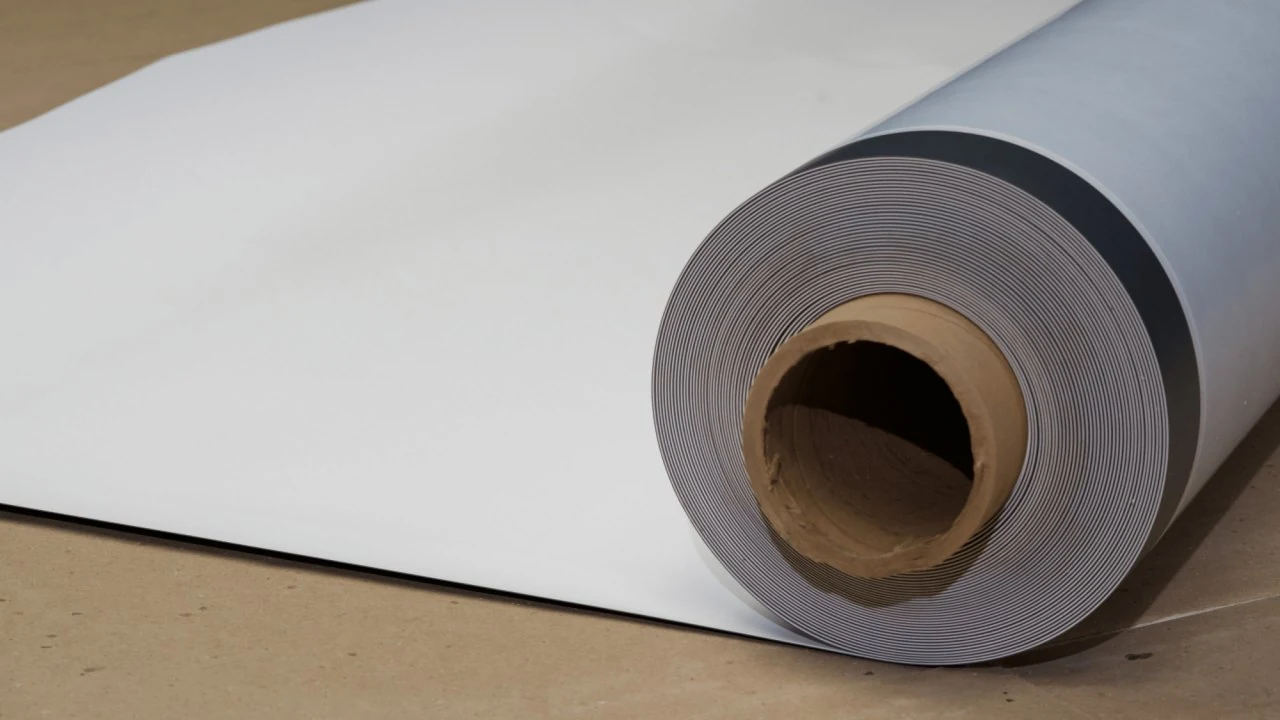
EPDM's base polymer does not come white the way TPO's compound does. Manufacturers produce white EPDM either by laminating a white thermoplastic-like cap ply onto the black rubber core during manufacturing, or by applying a factory-cured white surface layer bonded to the sheet before it ships. Either way, the black EPDM core underneath still supplies the tear strength, elongation, and weathering profile the product is known for. The white layer is doing the reflectance job; the rubber underneath is doing the structural job.
What that means on a takeoff: white EPDM costs more per square foot than black EPDM of the same gauge, and thickness options run narrower, typically 60 and 90 mil rather than the full 45-to-90 range available in black. For most Ontario commercial roofs the 60-mil sheet covers it.
Where This Spec Fits Ontario's Conditioned Buildings
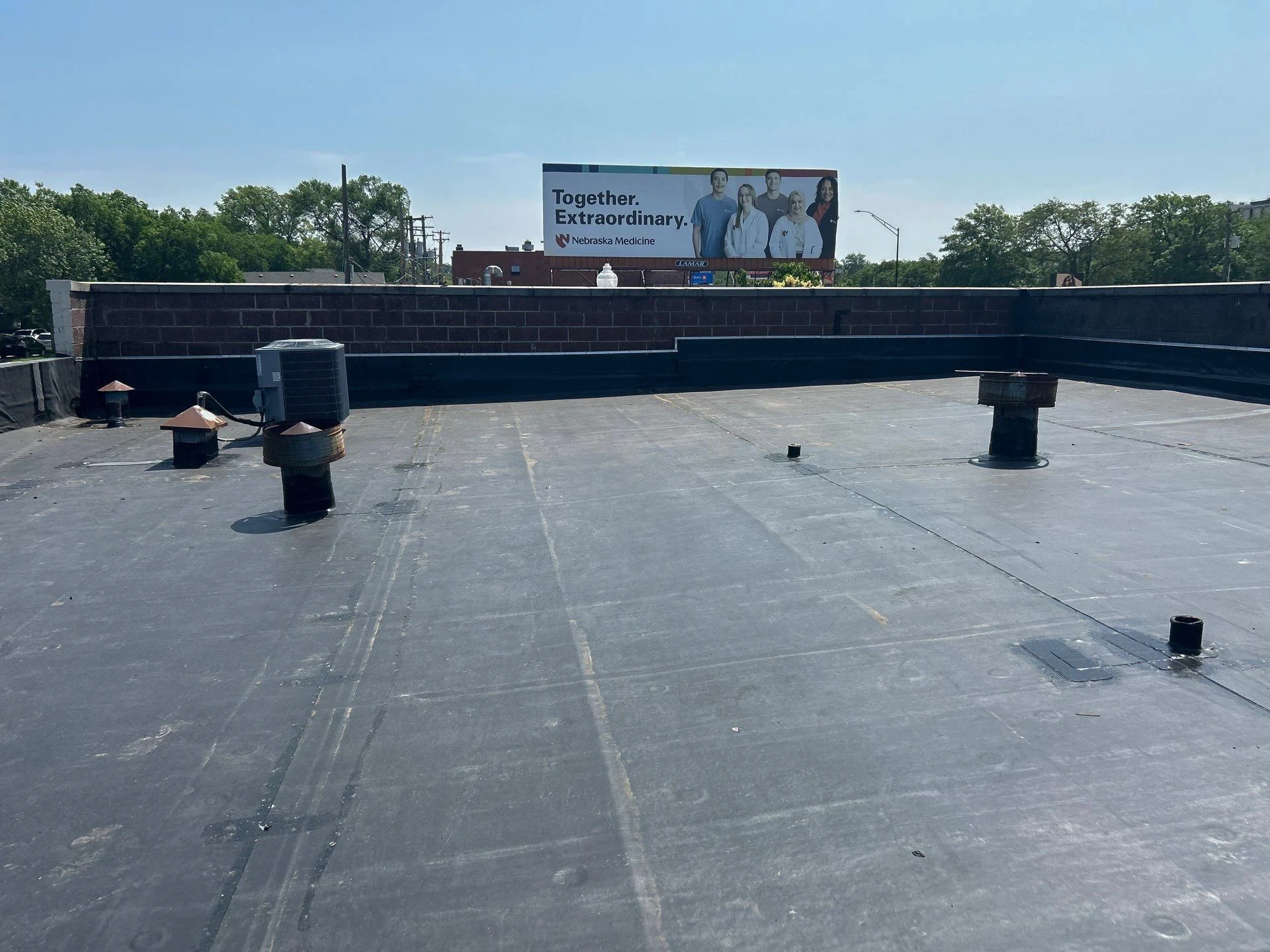
We spec white EPDM most often on conditioned buildings with unusually complex roof geometry , older medical office buildings around Chino Hills and San Dimas business parks with numerous roof-mounted condenser units, parapet returns, and mismatched deck heights from additions built over different decades. EPDM's flexibility and larger sheet format make those tie-ins faster to detail correctly than a stiffer thermoplastic sheet, and the white surface clears the Title 24 reflectance requirement those buildings need for permit.
It also shows up on office and light-industrial roofs in the Diamond Bar corridor near the Gateway Corporate Center, where owners want the cool-roof compliance and energy performance of a reflective membrane but are recovering over a deck or insulation configuration where EPDM's field performance history gives their lender more comfort than a newer thermoplastic chemistry would.
Seaming: Adhesive, Not Heat Weld
This is the detail owners moving from TPO quotes are often surprised by. TPO and PVC seams are heat-welded, fusing the sheets into one continuous surface. EPDM seams are bonded with liquid adhesive or, more often now, factory-applied tape with a primer step. The bond strength is different in kind, not necessarily in outcome, but it changes how quality control works on the roof: instead of probing a weld with a cotter pin to confirm fusion, our crews are checking primer coverage, roller pressure on the tape, and cure time before the seam sees any traffic or water. We build seam inspection into the closeout walk on every EPDM job for exactly this reason.
- Sheet thicknesses commonly stocked: 60 and 90 mil, white surface over black rubber core
- Seaming method: primed splice tape or liquid adhesive, not heat welding
- Attachment: fully adhered or mechanically fastened; ballasted white EPDM is uncommon locally
- Typical warranty: 20 years NDL with proper flashing and seam detail
- Title 24: white surface clears the aged solar reflectance threshold for low-slope commercial roofs
- Best-fit roofs: complex geometry, multiple roof-mounted units, conditioned space requiring cool-roof compliance
Does the White Surface Hold Up, or Just Chalk and Gray Out?
This is the honest question to ask before paying the white premium. The reflective surface does pick up dirt and can gray over years of exposure, the same way any light-colored roofing product does in a dusty inland climate with Santa Ana wind events carrying dust off the desert. Reflectance drops from its installed value over time on every white membrane, EPDM included, which is why Title 24 measures aged reflectance rather than initial reflectance for compliance. Periodic washing as part of a maintenance program helps recover some reflectance and, more importantly, lets an inspector actually see the seams and flashings during the visit rather than working through a film of dust.
Straight Answers on White EPDM
Why choose white EPDM over white TPO if both clear Title 24?
Mostly roof geometry and existing-condition factors. On a straightforward open field, TPO's heat-welded seams and lower material cost usually win. On a roof with heavy penetration density, irregular framing, or a strong existing history with EPDM, the rubber sheet's detailing flexibility can be worth the added cost.
Is white EPDM as reflective as white TPO?
Both are formulated to clear the same Title 24 aged-reflectance threshold, and manufacturer published values are close. Neither stays at its brand-new reflectance number forever; both benefit from periodic cleaning as part of routine roof maintenance.
Are adhesive seams less reliable than heat-welded seams?
Not inherently, but they depend more heavily on installation quality , primer coverage, roller pressure, and cure time all matter. That is why our EPDM crews run a seam-specific quality control step that a TPO crew handles differently, with probe testing on the weld itself.
Can white EPDM go down as a recover over existing black EPDM?
Often, yes, provided a moisture survey confirms the existing membrane and insulation are dry. We core-cut and scan before quoting any recover; burying wet insulation under a new membrane is the costliest mistake in this trade.
Does white EPDM cost meaningfully more than black EPDM?
Yes, on a per-square-foot material basis, since the white surface adds a manufacturing step. On a total installed cost basis the gap narrows, because labor, insulation, and flashing detail are the same either way. We quote both on any job where Title 24 exceptions apply, so the owner sees the real delta.
Related
Ready to review the roof scope?
Request a Roof AssessmentProject List
60-Mil TPO Roofing in Ontario, CA
60-mil TPO spec details for Ontario, CA warehouses and retail: membrane construction, attachment options, Title 24 compliance, and 20-year lifecycle math.
80-Mil TPO Roofing in Ontario, CA
80-mil TPO for Ontario, CA logistics and solar-ready roofs: thickness-over-scrim numbers, 25 to 30-year warranties, and cost-per-year comparisons vs 60-mil.
Black EPDM Roofing in Ontario, CA
Black EPDM specs for Ontario, CA: sheet thicknesses, ballast vs. adhered attachment, Title 24 exceptions, and where rubber roofing still beats TPO on cost.

White EPDM Roofing in Ontario, CA
White EPDM for Ontario, CA commercial roofs: how the white surface is built, Title 24 compliance, adhesive-seamed detailing, and long-term reflectivity numbers.
SBS Modified Bitumen Roofing in Ontario, CA
SBS modified bitumen for Ontario, CA's older commercial buildings: application methods, multi-ply redundancy, and where it still beats single-ply membrane.
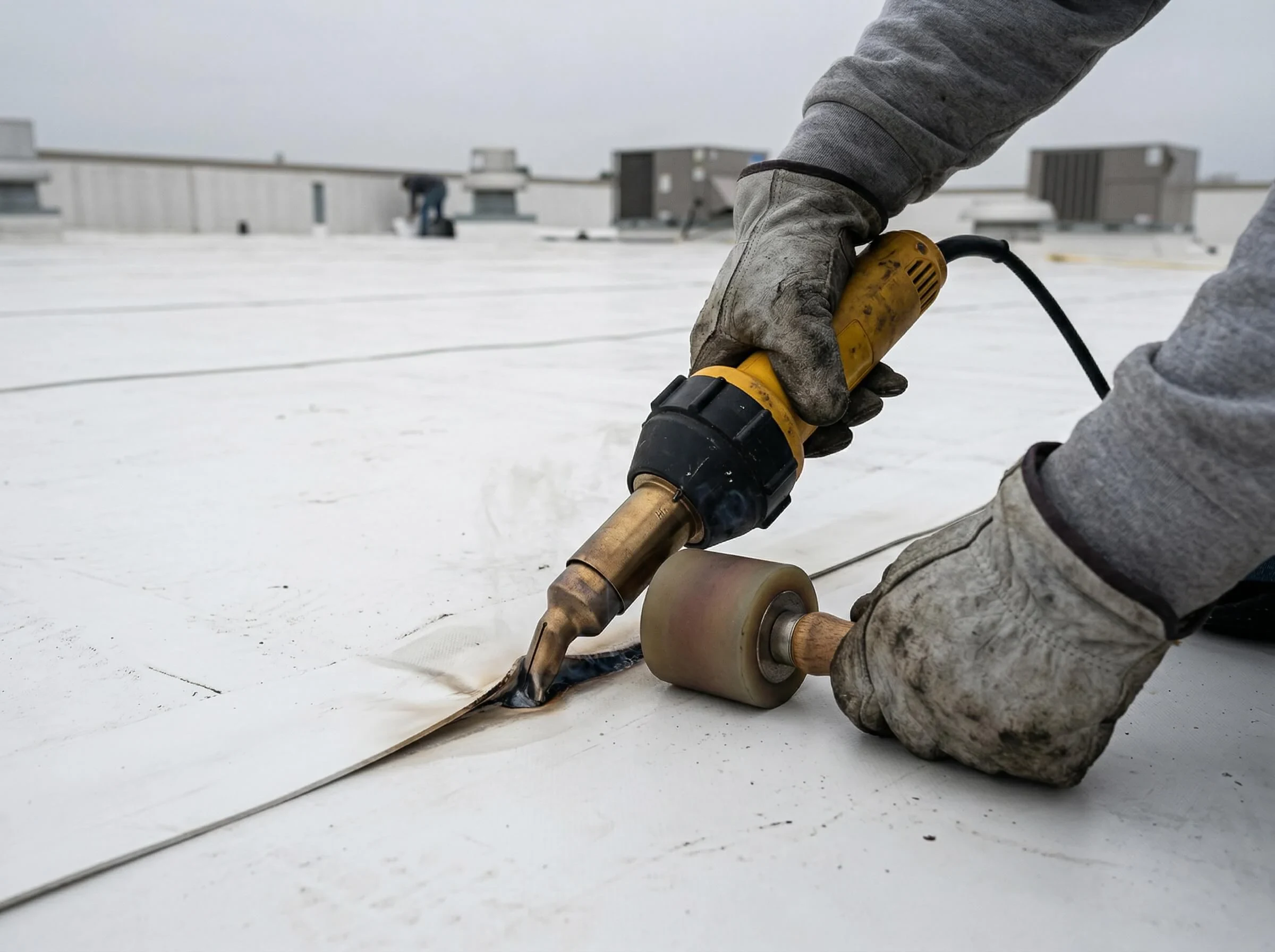
PVC Roofing Systems in Ontario, CA
PVC membrane specs for Ontario, CA restaurants, dealerships, and manufacturing roofs: grease and chemical resistance, weld parameters, and warranty terms.
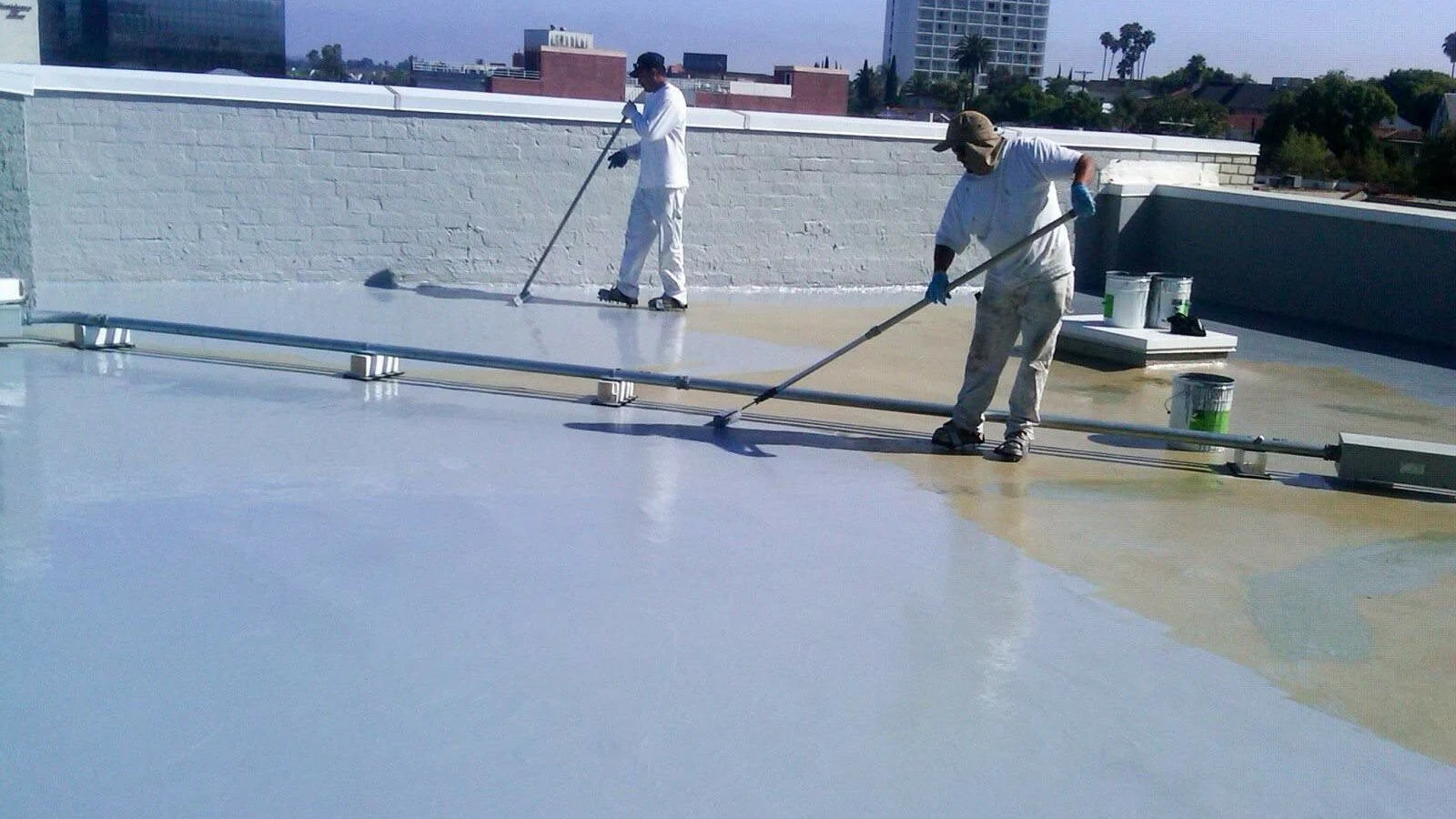
Silicone Roof Coatings in Ontario, CA
Silicone roof coating restoration for Ontario, CA commercial buildings: substrate prep, ponding-water performance, and the math against full tear-off.
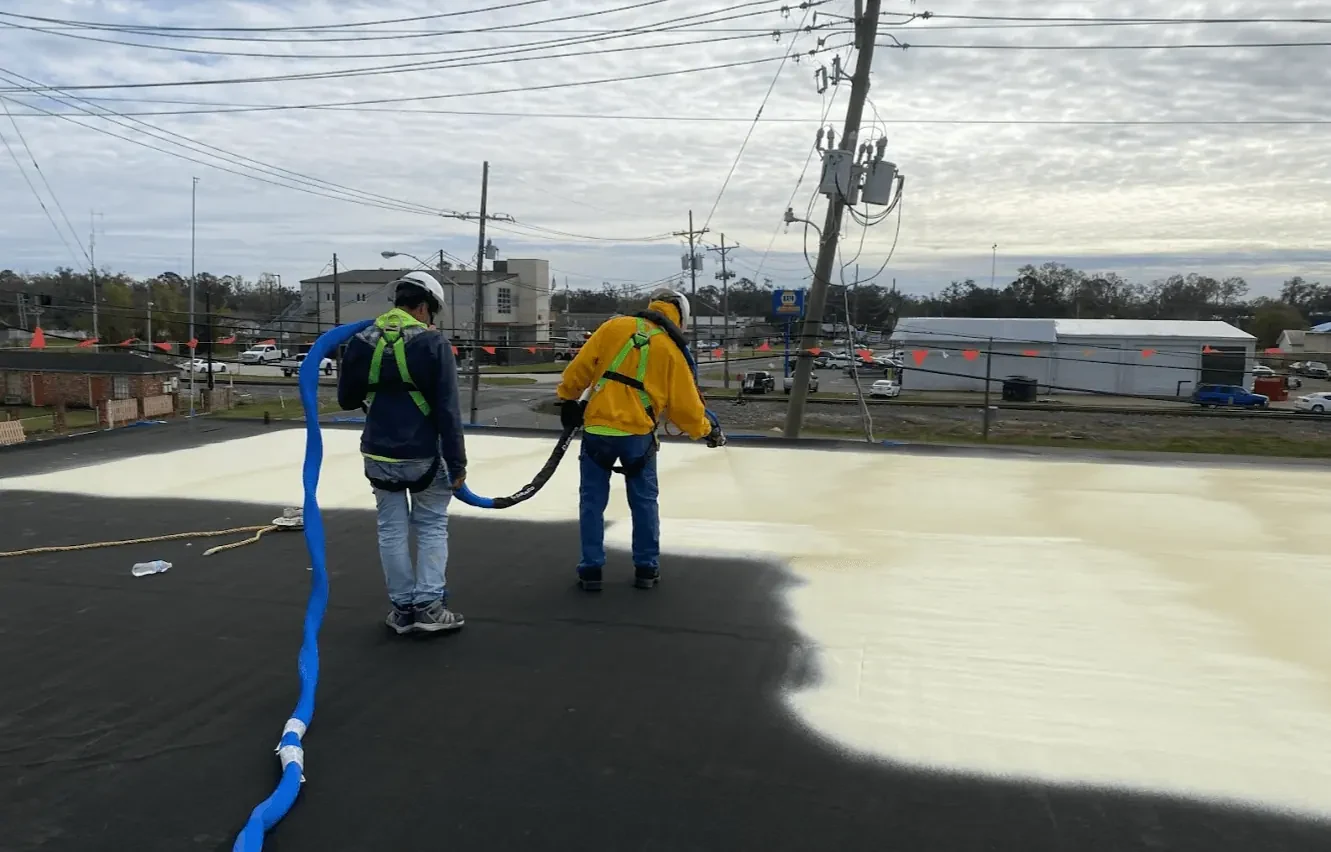
Spray Polyurethane Foam Roofing in Ontario, CA
SPF roofing for Ontario, CA buildings with dense rooftop equipment or ponding issues: application process, R-value math, and recoat maintenance cycles.